how to make easy scented candles: 7 Critical Steps You Must Know in 2026
- how to make easy scented candles: 7 Critical Steps You Must Know in 2026
- 📋 Key Takeaways
- Table of Contents
- Why 2026 is the Perfect Time to Start Crafting
- The Booming Wellness Market
- Say Goodbye to Hidden Toxins
- The Essential Supplies Checklist (And What to Skip)
- Choosing the Right Wax
- Wicks, Vessels, and Fragrances
- The Ultimate Guide on How to Make Easy Scented Candles
- Step 1: Prep Your Workspace and Vessels
- Step 2: The Math and The Melt
- Step 3: Temperature is Everything
- Step 4: Pour and Cure
- Top Trending Fragrances to Try in 2026
- Salty Florals and Coastal Escapes
- Earthy and Smoked Profiles
- Troubleshooting Common Beginner Mistakes
- Fixing Sinkholes and Tunneling
- Dealing with Frosting and Wet Spots
- Aesthetic Packaging and Gifting Ideas
- Minimalist Labels and Custom Touches
- Frequently Asked Questions (FAQ)
- What is the most important rule when learning how to make easy scented candles?
- Can I use food coloring to dye my wax?
- How much fragrance oil should I actually use?
- Why does my creation have no smell when I burn it?
- What is the 3-hour burn rule?
- Can I use essential oils instead of fragrance oils?
Imagine walking into your home after an exhausting day, striking a match, and instantly filling your living room with the luxurious, calming aroma of smoked vanilla and fig. If you have ever wondered how to make easy scented candles, you are in exactly the right place. Creating your own aromatic sanctuary doesn’t require a chemistry degree or expensive industrial equipment. In fact, it is one of the most accessible and rewarding DIY projects you can start today.
Learning how to make easy scented candles is a rewarding skill that saves you money while allowing you to control every single ingredient you bring into your home. With the global candle market projected to reach over $15.6 billion in 2026, retail prices for luxury home fragrances have skyrocketed. Why pay $40 for a designer glass jar when you can craft a cleaner, better-smelling alternative for less than $5? Grab your favorite apron, clear off some counter space, and let’s dive into the ultimate guide to mastering this craft.
📋 Key Takeaways
- Cost Efficiency: Making your own luxury-style candles costs a fraction of retail prices, averaging just $3 to $5 per jar.
- Health & Safety: By choosing 100% natural soy or coconut wax, you eliminate the toxic soot associated with cheap paraffin alternatives.
- Customization: You have total control over the fragrance load, allowing you to create signature scents like Coastal Sage or Salted Caramel.
- Simplicity: The entire process boils down to four basic steps: measure, melt, mix, and pour.
Why 2026 is the Perfect Time to Start Crafting
Have you noticed how expensive a simple trip to a home goods store has become recently? The home fragrance industry has undergone a massive transformation. Consumers are no longer just buying wax and a wick; they are investing in mood, aesthetics, and mental wellness.
The Booming Wellness Market
Recent market statistics show that the global candle industry is expected to exceed $15.6 billion in 2026. This surge is heavily driven by a growing focus on self-care rituals and at-home aromatherapy. People want their homes to feel like private spas. However, this premiumization means that big brands are charging premium prices. By mastering how to make easy scented candles, you bypass the massive retail markups completely.
Say Goodbye to Hidden Toxins
Another major reason to take the DIY route is ingredient transparency. Many mass-produced options still rely on paraffin wax—a byproduct of petroleum refining. When burned, paraffin can release volatile organic compounds (VOCs) into your indoor air. By sourcing your own materials, you can opt for clean-burning, sustainable alternatives that are safe for your family and pets.
The Essential Supplies Checklist (And What to Skip)
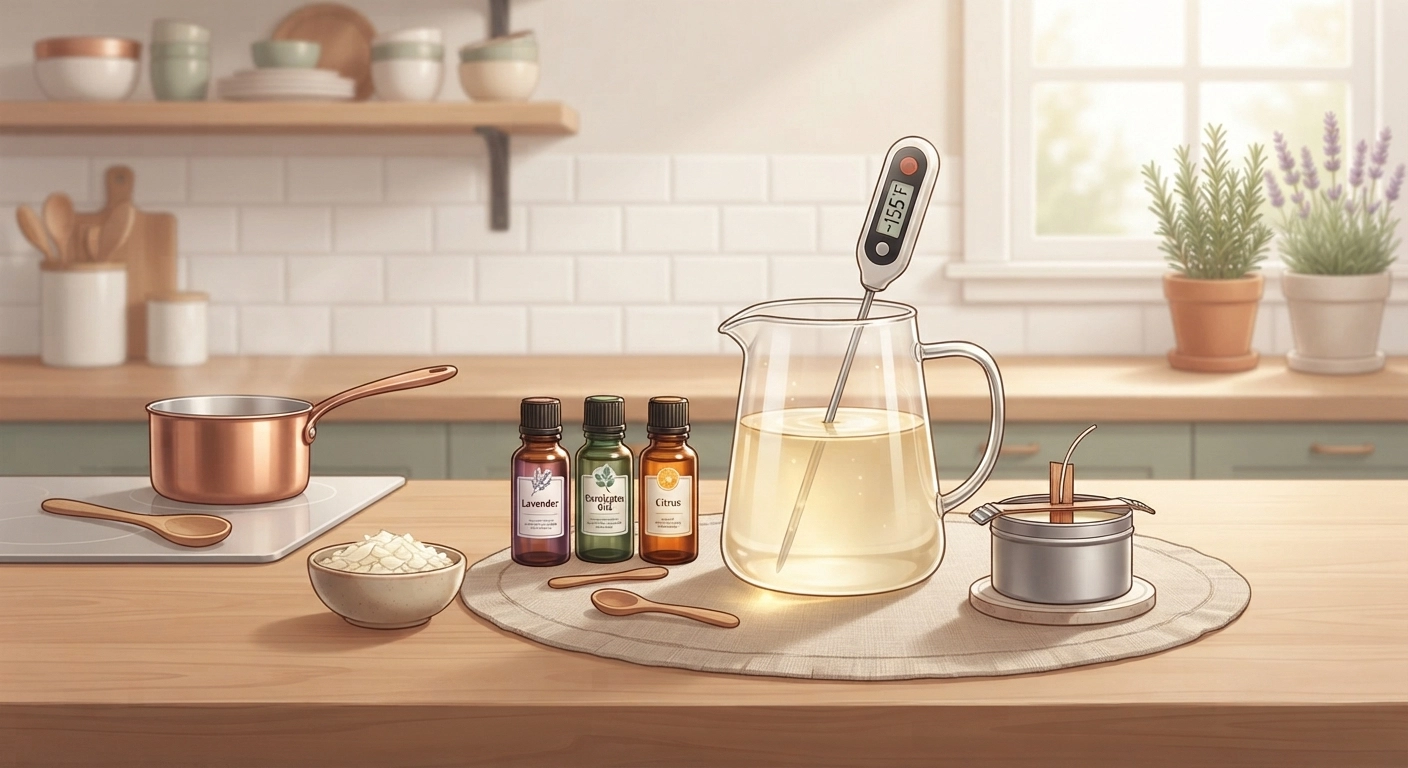
When figuring out how to make easy scented candles, your choice of materials will dictate the quality of your final product. You don’t need a massive laboratory setup, but you do need the right basics. Let’s break down exactly what belongs in your starter kit.
Choosing the Right Wax
Not all waxes are created equal. In 2026, the clear winners for home crafters are natural plant-based waxes. Soy candles remain incredibly popular because they burn slowly, clean easily with soap and water, and hold fragrance beautifully. Coconut wax blends are also trending heavily this year, offering an ultra-creamy texture and an exceptional scent throw. Skip the paraffin entirely.
Wicks, Vessels, and Fragrances
Your wick is the engine of your creation. For beginners, pre-tabbed cotton wicks are the most forgiving. If you want a luxurious, crackling fireplace effect, wooden wicks are a fantastic upgrade. For vessels, anything heat-safe will work. Mason jars, repurposed teacups, or sleek matte black tins are all excellent choices.
For scent, you have two options: essential oils or synthetic fragrance oils. While essential oils are 100% natural, they often have a low flash point, meaning they can burn off before the wax solidifies. High-quality, phthalate-free fragrance oils are specifically formulated for high heat and will give you that room-filling aroma you crave.
If you’re looking to upgrade your entire space beyond just beautiful fragrances, check out our guide on Easy DIY Room Decor Aesthetic: 15 Minimalist Ideas for 2026 to completely transform your home environment.
The Ultimate Guide on How to Make Easy Scented Candles
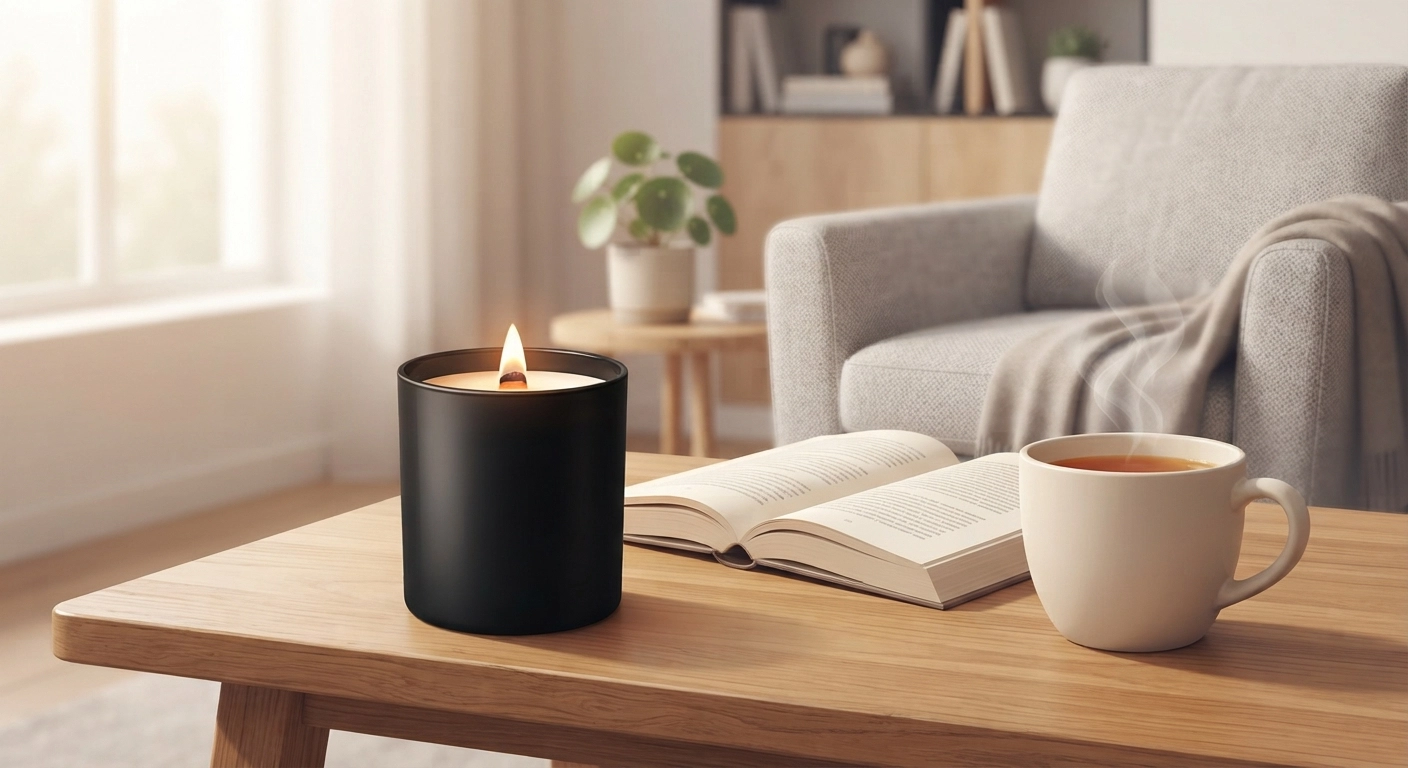
A major part of how to make easy scented candles successfully involves temperature control and patience. Follow these precise steps, and you will achieve a professional-grade result on your very first try.
Step 1: Prep Your Workspace and Vessels
Before you melt a single flake of wax, get your jars ready. Clean them thoroughly with a little rubbing alcohol to ensure the wick stickers adhere properly. Place a wick sticker on the bottom of your wick tab, and press it firmly into the center of your jar. Use a centering tool—or two popsicle sticks rubber-banded together—to hold the wick straight and taut.
Step 2: The Math and The Melt
You need to know how much wax to melt. A simple trick is to fill your empty jar with water, weigh the water in ounces, and multiply by 0.86. This gives you the exact weight of wax needed. Place your measured soy or coconut wax into a pouring pitcher. Create a double boiler by placing the pitcher inside a larger pot filled with a few inches of simmering water. Never melt wax directly over an open flame.
Step 3: Temperature is Everything
You might think that understanding how to make easy scented candles requires complicated science, but it really just comes down to a digital thermometer. Heat your wax to exactly 185°F (85°C). Why this specific number? At 185°F, the molecular structure of the wax expands enough to allow the fragrance oil to bind perfectly with it. Remove the pitcher from the heat and gently stir in your fragrance oil (usually an 8% to 10% fragrance load) for a full two minutes.
Step 4: Pour and Cure
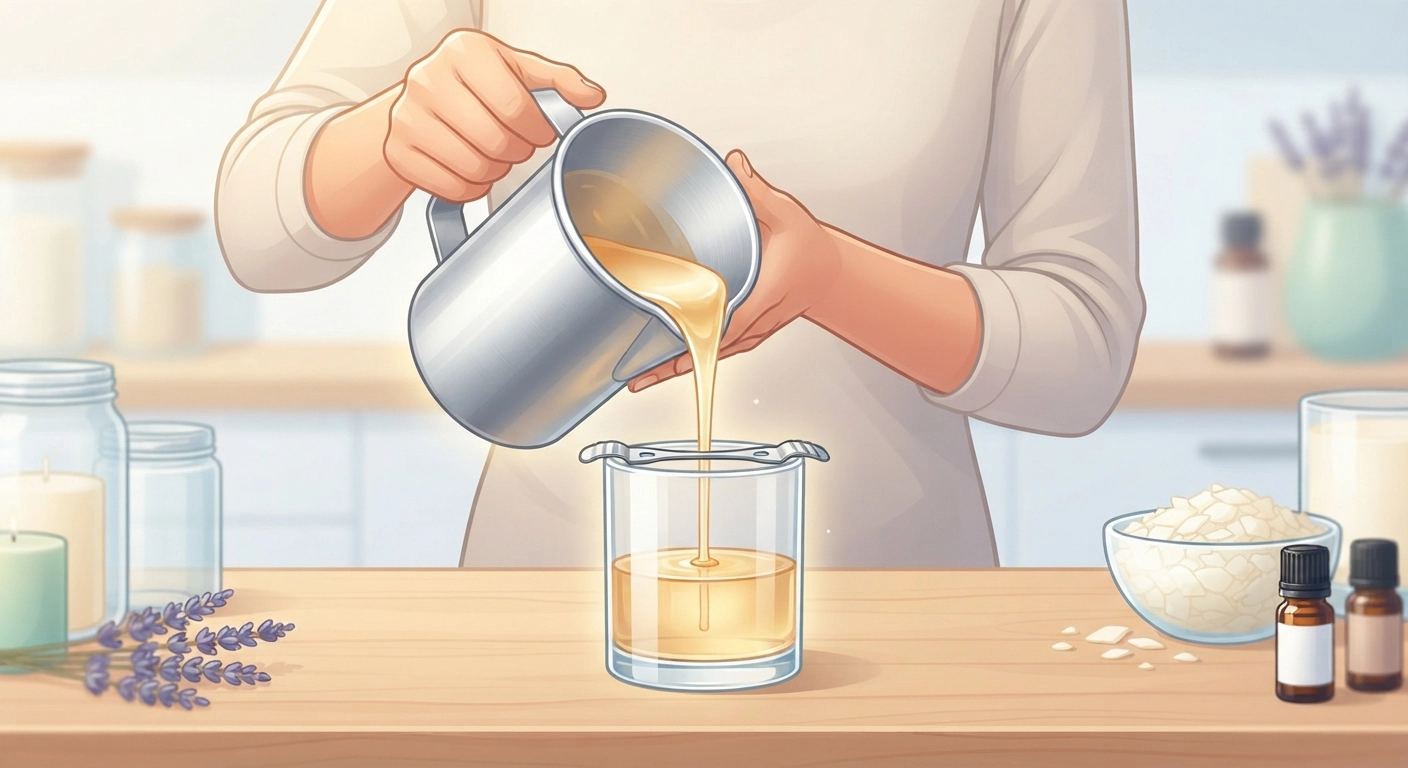
Do not pour immediately! Let the mixture cool down to about 135°F (57°C). Pouring at a lower temperature prevents the wax from shrinking too fast, which causes ugly sinkholes. Pour the liquid slowly into your prepared jars. Now comes the hardest part: waiting. Let them sit undisturbed for 24 hours. After that, trim the wick to 1/4 inch. For the absolute best scent throw, put the lid on and let it “cure” in a dark, cool place for 1 to 2 weeks.
Top Trending Fragrances to Try in 2026
The secret to how to make easy scented candles with a strong scent throw is choosing the right fragrance profile. The trends for 2026 have shifted away from overwhelmingly sweet baked goods toward sophisticated, layered, and nature-inspired aromas.
Salty Florals and Coastal Escapes
One of the biggest breakouts this year is the “salty floral” category. Think Coastal Sage paired with Sea Salt, or Driftwood mixed with Jasmine. These scents evoke the feeling of a high-end spa located on a breezy coastline. They are fresh, mineral-rich, and incredibly calming, making them perfect for bathrooms and bedrooms.
Earthy and Smoked Profiles
For living rooms and cozy evening vibes, warm and woody profiles are dominating. Smoked Vanilla mixed with Fig is currently a massive hit, offering a balance of sweet fruit and savory smoke. Sandalwood paired with Vanilla Bourbon is another 2026 favorite, providing a rich, opulent background scent that feels inherently luxurious.
Thinking about turning this new hobby into a lucrative side hustle? Read our comprehensive breakdown of DIY Crafts to Make and Sell: 10 Profitable Ideas for 2026 to start monetizing your beautiful creations.
Troubleshooting Common Beginner Mistakes
Many beginners searching for how to make easy scented candles often overlook the small details that lead to frustrating aesthetic flaws. Don’t worry if your first batch isn’t flawless—every mistake is easily fixable.
Fixing Sinkholes and Tunneling
If your wax cools and leaves a crater near the wick, you poured it while it was too hot. You can easily fix a sinkhole by using a heat gun on a low setting to gently melt the top layer of wax until it levels out. If your candle burns straight down the middle leaving hard wax on the sides, this is called “tunneling.” This usually means your chosen wick is too small for the diameter of the jar, or you didn’t let the candle burn long enough during its first lighting.
Dealing with Frosting and Wet Spots
If you notice white, crystalline patches on the sides of your glass jar, don’t panic. This is called “frosting,” and it is a natural characteristic of 100% pure soy wax. It doesn’t affect the burn quality at all. “Wet spots,” which look like air bubbles trapped between the wax and the glass, happen when the wax pulls away from the jar due to temperature fluctuations. To prevent this, pre-heat your glass jars slightly in the oven before pouring.
Aesthetic Packaging and Gifting Ideas
Mastering how to make easy scented candles gives you complete control over presentation. A beautifully packaged jar makes for an unforgettable, personalized gift for birthdays, holidays, or housewarming parties.
Minimalist Labels and Custom Touches
In 2026, minimalist aesthetics are key. Use a simple, textured white label with a clean, sans-serif font. Name your scents something evocative, like “Midnight Library” or “Sunday Morning Rain.” Tie a piece of natural jute twine around the lid, or seal the box with custom wax stamps.
A beautiful handmade item deserves equally stunning packaging. Why not top your gift box with handmade floral accents? You can learn exactly how to do this in our How to Make Paper Flowers: Step-by-Step Guide for Beginners.
Frequently Asked Questions (FAQ)
What is the most important rule when learning how to make easy scented candles?
Temperature control is the absolute most critical factor. Always use a digital thermometer. Adding fragrance oil at 185°F ensures it binds properly, and pouring at 135°F ensures smooth tops. Guessing the temperature usually results in weak scents and ugly wax finishes.
Can I use food coloring to dye my wax?
No, you should never use liquid food coloring or crayons. Food coloring is water-based and will not mix with the oils in the wax. Crayons contain pigments that will quickly clog your wick, causing the flame to drown. Always use dedicated liquid dye or dye blocks formulated specifically for wax.
How much fragrance oil should I actually use?
A standard rule of thumb is a 6% to 10% fragrance load. For 1 pound (16 ounces) of wax, using 1 ounce of fragrance oil gives you roughly a 6% load, which is perfect for most high-quality oils. If you want a stronger scent, you can push it to 1.5 ounces, but check your specific wax’s maximum load capacity first.
Why does my creation have no smell when I burn it?
This is usually due to a lack of curing time. While the wax hardens in 24 hours, the fragrance oil needs 1 to 2 weeks to fully integrate and bind with the wax molecules. If you burn it immediately, you will get a very faint “hot throw.” Patience is key!
What is the 3-hour burn rule?
The first time you light your new creation, you must let it burn until the melt pool reaches the entire edge of the glass container. This usually takes about one hour per inch of the jar’s diameter (typically 3 to 4 hours). Wax has a “memory,” and if you blow it out too soon, it will tunnel downwards forever.
Can I use essential oils instead of fragrance oils?
Yes, but with caution. Essential oils are highly volatile and can evaporate quickly when added to hot wax. They also don’t provide as strong of a hot throw as synthetic, skin-safe fragrance oils. If you do use them, ensure you check their flash points and add them at a slightly lower temperature.
Now that you know exactly how to make easy scented candles, the only limit is your creativity. From selecting the perfect sustainable wax to blending a custom fragrance that captures the essence of a rainy Sunday morning, this craft offers endless possibilities for personalization. Don’t be afraid to experiment with different wick sizes, jar shapes, and scent combinations until you find your perfect signature blend.
Ready to elevate your home aesthetic even further? Dive into our other creative tutorials on the site, or check out our Sample Page to see what other amazing DIY projects we have in store for you this year. Happy pouring!